Retail / Japan's Restaurants Rent Their Fake Food by the Month
The plastic ramen in the window isn't bought. At Japan's biggest replica maker, about 70% of shops pay a monthly fee that covers seasonal swaps, repairs and a visit from a sales rep.
Walk past restaurants in Japan and you will often see the menu before you are handed one: bowls of ramen, plates of curry rice and trays of sushi, set out behind the glass in the window. Look closer and none of it is food. These are shokuhin sampuru, food replicas, made and painted by hand to look real enough to eat. Even a visitor who cannot read a word of Japanese can tell at a glance what the restaurant serves, and roughly what will arrive on the plate.
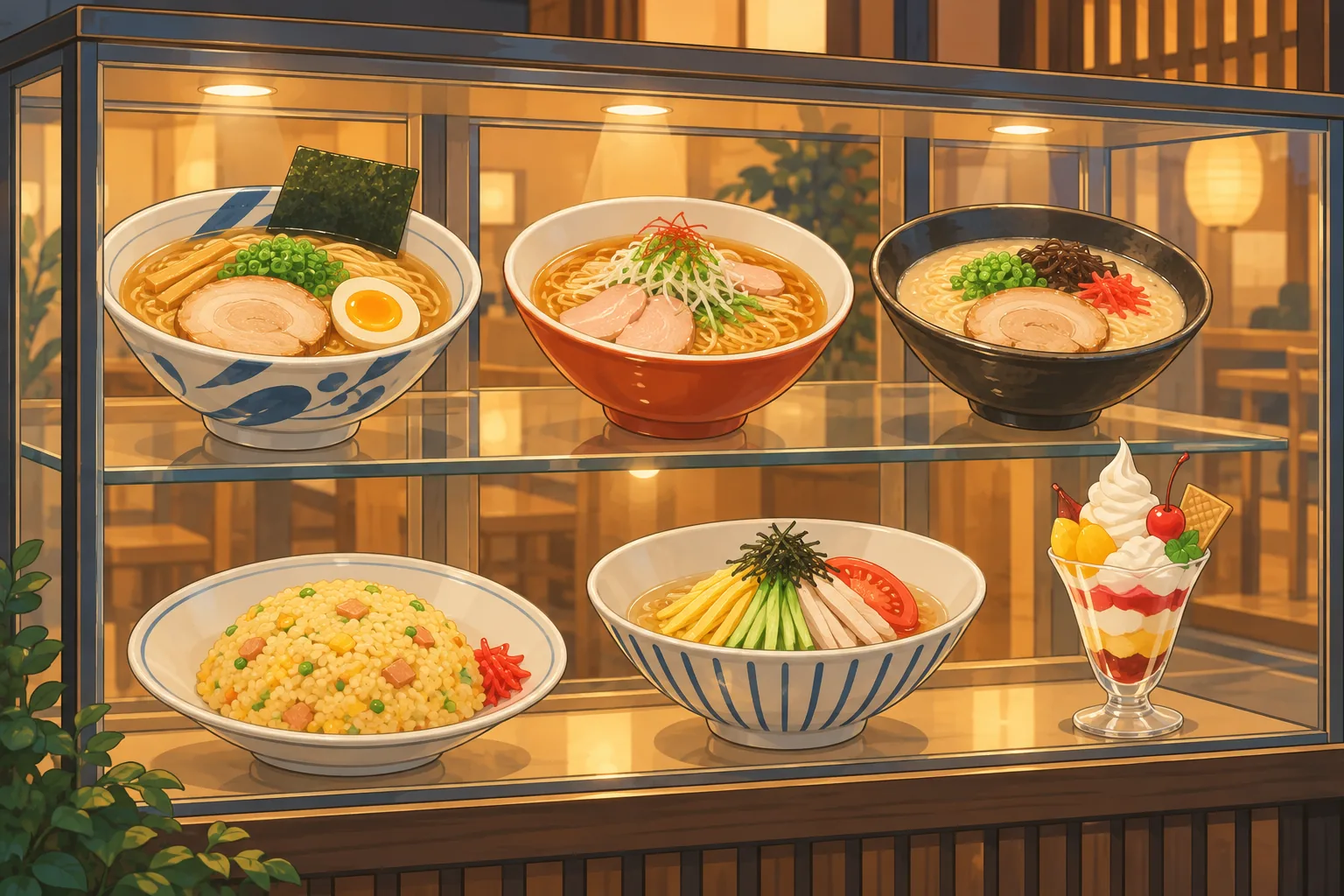
The replicas look like something the shop bought once and dusts occasionally. At Japan's biggest maker, most client shops don't own them. They rent them.
Iwasaki Co., which calls itself No. 1 in national share for food replicas, says on its website that about 70% of its client shops use its rental service. The shop pays a monthly fee instead of buying the samples outright. When the menu changes for the season, the samples change too, and the shop pays only for the period each one was on display. Samples are replaced before they fade or get grimy. If one breaks unexpectedly, the company says it repairs or replaces it free. And a sales rep visits regularly to check on them.
In other words, the fake food in the window comes with a subscription.
A business model as old as the product
Renting was not an afterthought. Takizo Iwasaki founded the business in Osaka in 1932, and the group's own history says he chose to lend his samples for small monthly payments from the start, which helped him win customers. The samples were not cheap: the same history says they were priced at roughly ten times the cost of the real dish.
Iwasaki Co. still makes the case in the same terms. Buying outright, it says, means a large upfront payment and the trouble of keeping samples looking clean. Renting spreads the cost into a monthly promotion budget.
What the shop is really buying
In our reading, the rental turns a one-off purchase into a service, and the service is where the value is.
A replica's job is to make a dish look appetizing to someone walking past. It loses that power as it sits in the sun and collects dust, and it becomes wrong the moment the menu changes. A shop that owns its samples has to notice, pay again, and wait. A shop that rents them has someone whose job is to notice.
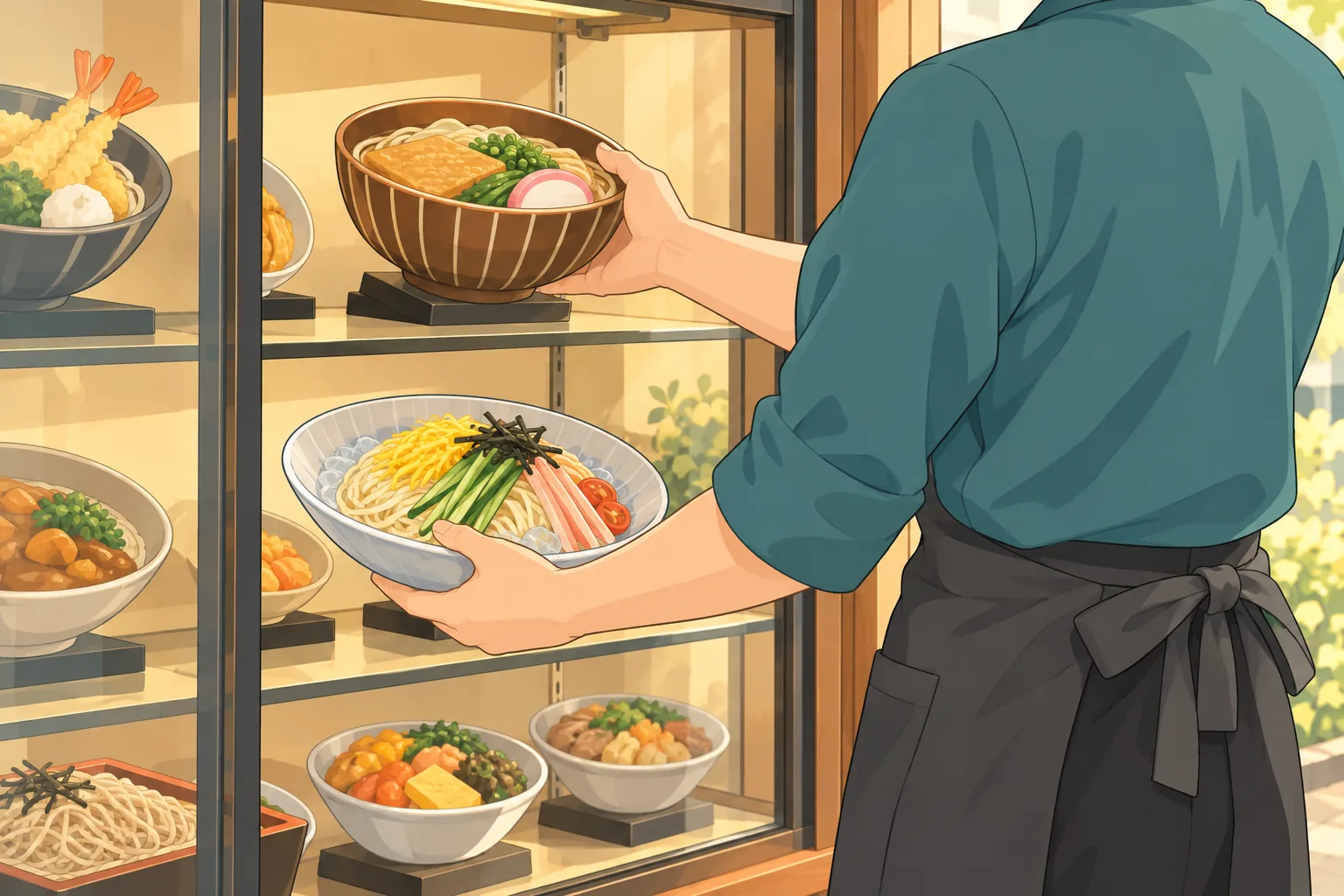
For the maker, the monthly fee is steady revenue, and the regular visit is a sales channel. Iwasaki Co. now also offers food photography, promotional tools and restaurant fixtures, and a rep who comes to swap the summer noodles for winter ones is in the right place to offer them.
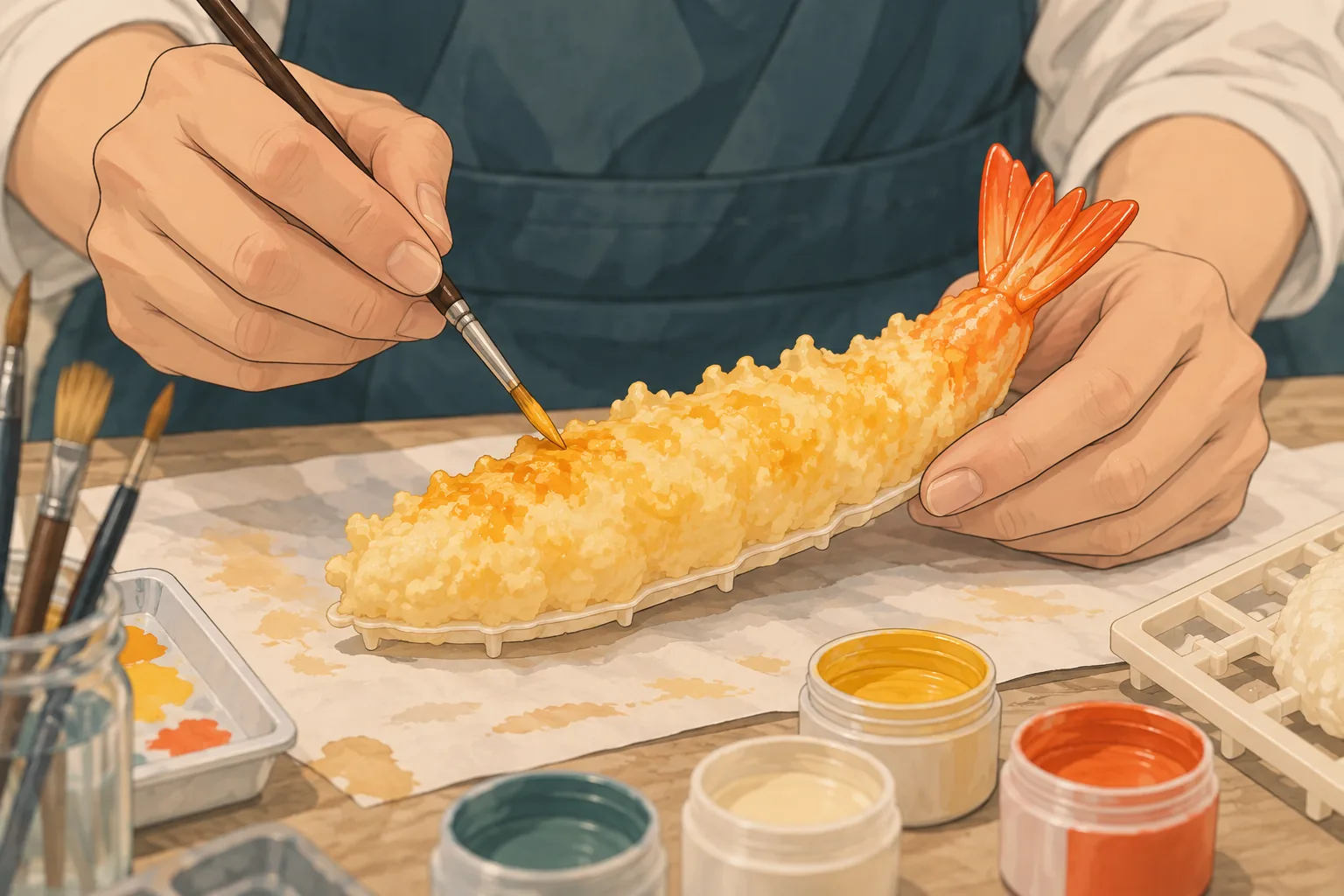
It is also labor-heavy work. CNN, covering a 2024 exhibition of Iwasaki replicas at Japan House London, quoted the curator as saying the company needs to make on average one replica every 40 minutes to stay viable. They are still made and painted by hand.
Replicas abroad
Today the Iwasaki group lists related companies in South Korea, the UK and Germany. For the London exhibition, Iwasaki was commissioned to make 47 new samples, one for each of Japan's prefectures, for a cultural center rather than a restaurant window.
Outside Japan, demand also shows up in smaller ways. JETRO reported in 2019 that a restaurant owner in Singapore had been buying nigiri-sushi samples in Japan, because food samples were not sold in overseas markets. The same report described a practical problem from the experience of another maker, Iwasaki Mokei Seizo: in the company's view, Japanese and foreign customers find different colors appetizing, so a replica made for Tokyo may not sell food in Singapore.
Could the rental model work abroad?
The overseas examples we found are about selling or showing the replicas themselves: a Singapore owner buying sushi samples in Japan, an exhibition in London. In our English- and Japanese-language web searches in November 2026, we did not find a report of Iwasaki's monthly rental service being offered outside Japan. That is the limit of what we looked at, not proof that no such service exists anywhere.
In our reading, the rental would be harder to export than the replica. The replica is a product; the rental is a service of monthly fees, seasonal swaps and a person who visits. It is likely to work best where a company has enough client shops close together to make the visits pay.
Could This Work in the U.S.?
In Japan, about 70% of Iwasaki Co.'s client shops now rent instead of buying. Would an American restaurant pay a monthly fee for a window display that someone else keeps fresh?
Company links
Links to the companies' own sites and to stock quotes. We have no business relationship with them.
- Iwasaki Co. — Official site
- Ganso Shokuhin Sample-ya — Shop
Sources
F1. Service plans: the Best plan (rental service) — Iwasaki Co. (official site) F2. Company outline — Iwasaki Co. (official site) F3. Replica foods: history of Iwasaki (brochure) — Iwasaki group (Ganso Shokuhin Sample-ya), 2022-11 F4. Company profile — Iwasaki group (Ganso Shokuhin Sample-ya) F6. This food looks too good to be real, and it is (Japan House London exhibition) — CNN Style (via ABC17), 2024-12-16 F7. Exporting food-replica products and culture: Iwasaki Mokei Seizo's overseas expansion (Singapore, Japan) — JETRO, 2019-08-21 F8. Japan House London announces Looks Delicious! Exploring Japan's food replica culture — Japan House London via PR Newswire, 2024-07-31