Food / The World Wants Matcha. Japan Can't Grow It Fast Enough
Japan's green-tea exports nearly doubled in a year, most of it powder. Prices jumped, a famous Kyoto shop raised its prices, and China says it now makes most of the world's matcha.
Japan sold more green tea abroad in 2025 than ever, and most of it was powder.
Green-tea exports reached ¥72.1 billion (about $460 million) in 2025, nearly double the year before, and 12,612 tonnes, according to the farm ministry. Powdered tea, the category that includes matcha, made up about 69% of the volume and about 84% of the value, worth ¥60.38 billion (about $385 million).
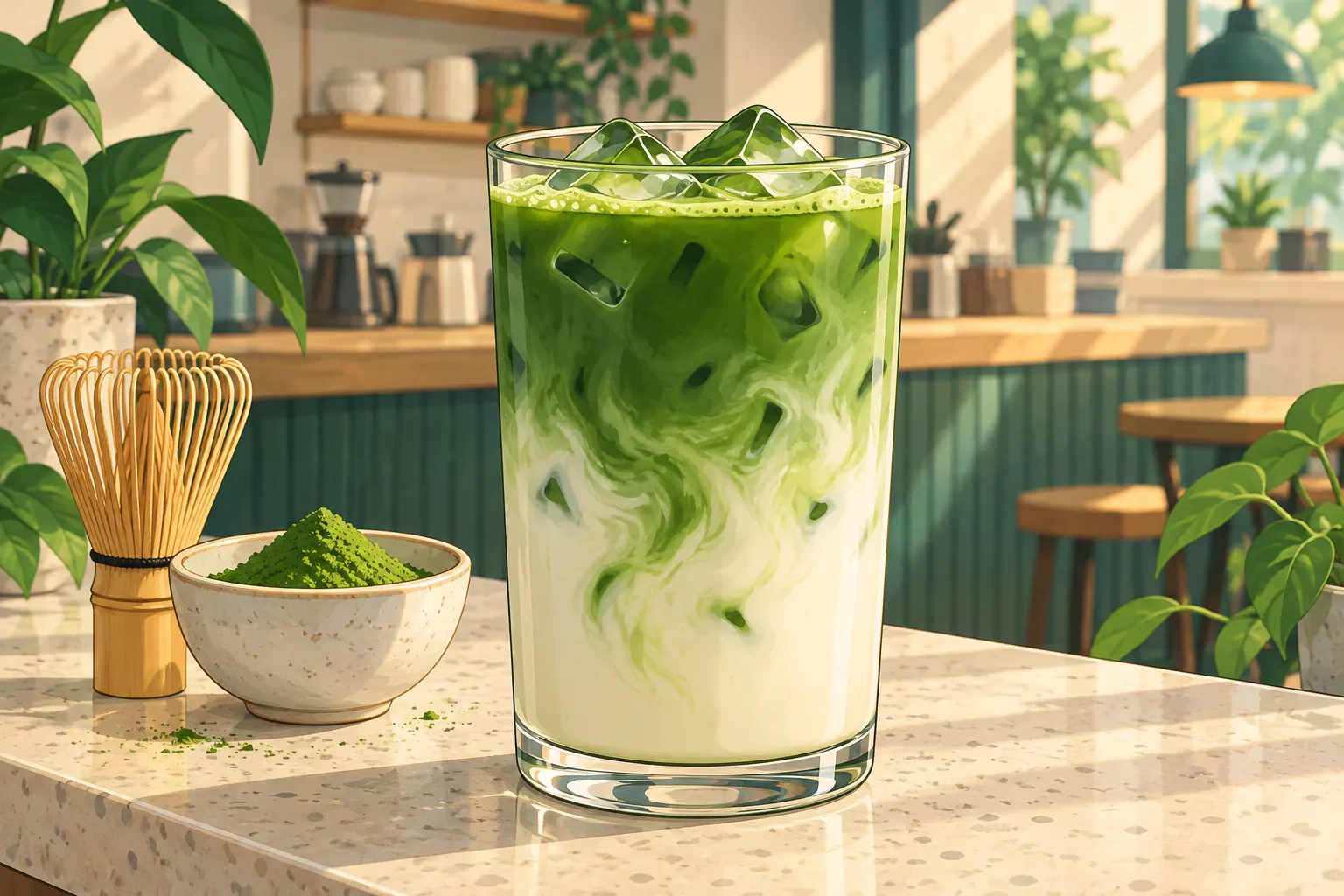
The biggest customer by far is the United States, which bought ¥29.34 billion (about $187 million) of Japanese green tea in 2025. In our reading, cafés and iced lattes, more than the tea ceremony, are behind the growth, though the trade figures do not show how the tea is used.
A crop that can't just double
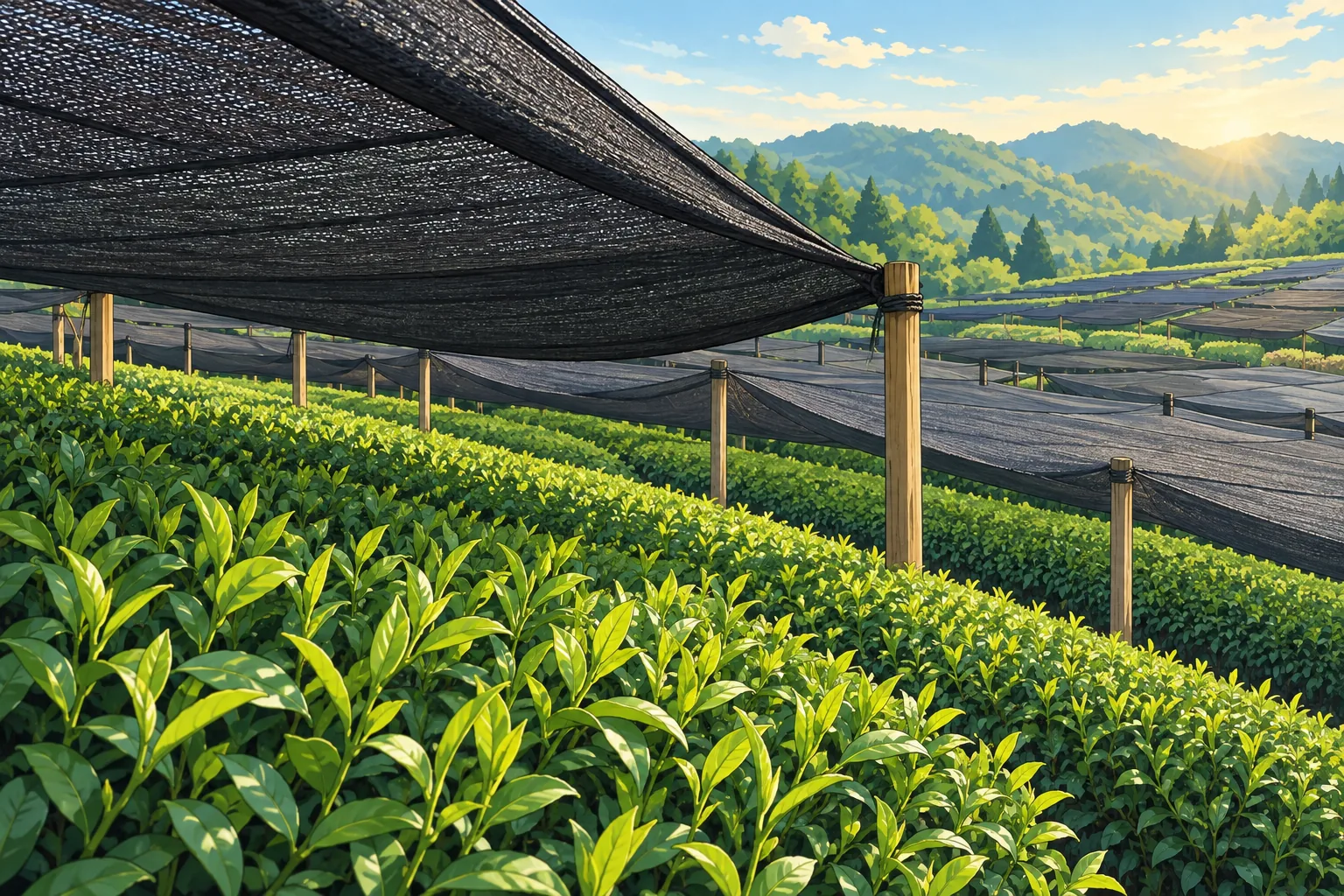
The problem is on the farm. Matcha is ground from tencha, tea leaves grown in shade and dried flat. Japan produced about 6,278 tonnes of tencha in 2025, about 3.2 times as much as in 2014. That is fast growth for a crop. But it is happening inside an industry that is not growing: Japan's total output of crude tea was 75,100 tonnes in 2025, and the ministry describes it as holding in the 70,000-tonne range.
Buyers felt the squeeze early. A Chicago tea importer told CBS News in April 2025 that it had noticed the shortage in late 2024, and that Japan was at its "critical mass" for matcha production.
Prices followed. A Kyoto matcha supplier, citing the JA Zen-Noh Kyoto tea market, says the average price of hand-picked Uji tencha rose 135% in 2025, and about 11% more in the 2026 first harvest. The farm ministry's own report says 2026 first-flush tea traded at about double the previous year's price in Kagoshima and about 70% higher in Shizuoka.
Kyoto raises its prices
Even the most famous names are adjusting. Ippodo, the Kyoto tea merchant, says it has had to raise prices on many items, citing "a massive increase in demand for matcha" and new US tariffs on Japanese goods.
In our reading, this is the shape of a boom that outruns its supply chain. The demand arrived in a few years through cafés and social media. The supply depends on shaded fields, spring harvests and grinding capacity, which take years to expand.
The warning signs were there in 2017
None of this came out of nowhere. In 2017, a survey for Japan's tea export council, carried out by Accenture with interviews at US businesses and a poll of 198 consumers, already described the American market that is straining supply today. By the report's estimate, one large café chain alone bought about 1,000 tonnes of matcha in 2016, about 750 tonnes of it from Japan, mostly drunk as matcha lattes by young women, and it forecast 1,200 tonnes for 2017. The report cautioned that these are estimates and that the total probably included supply later sent outside the US, to Canada for example.
The same report flagged the rest of today's story. That chain's Chinese matcha cost a third to a quarter of the Japanese price. Nothing legally restricted the word "matcha". And buyers were already worried that Japan's supply would not keep up, forcing them toward Chinese or Taiwanese powder.
Japan is not the only country making matcha, though.
The twist: China says it makes most of the world's matcha
The biggest surprise is on the supply side. People's Daily, citing an industry report, says China produced over 12,000 tonnes of matcha in 2025, nearly 70% of global output. We could not check how that report defines matcha or measures the world total, and its figure is for finished powder, while Japan's official number is for tencha, the leaf before grinding. So the two are not a like-for-like comparison.
One Chinese city shows how fast this is moving. Tongren, in Guizhou province, produced 2,500 tonnes of matcha in 2025 and exported 1,300 tonnes, and local media say its matcha has passed more than 500 EU pesticide-residue tests. In our reading, that last detail is aimed at European buyers, though test counts are not a guarantee for any single shipment.
In our reading, "matcha" is turning into a category rather than a Japanese product, the way "parmesan-style" cheese is made far from Parma. Japanese producers are left to compete on origin, grade and story, not on being the only source.
What this means for buyers
For a café, the choice is no longer simply "Japanese matcha". It is Japanese ceremonial grade, Japanese latte grade, or powder from China, which buyers need to compare on grade and delivered price; back in 2017, one big chain was paying a third to a quarter as much for its Chinese matcha. Our premium brief, sold separately, covers how a café sources matcha in a shortage: grades, prices, contract timing and US import rules.
What About the U.S.?
The US bought ¥29.34 billion of Japanese green tea in 2025, more than any other country. If Japanese matcha keeps getting scarcer and pricier, would American cafés switch to Chinese matcha, or pay more for "Made in Japan"?
What's in the members' edition
Sold separately, a premium brief: sourcing matcha for a café in a shortage
- Grades and prices
- Timing
- Bringing it into the US
- Questions to ask a supplier
- Worksheet: cost per drink
Company links
Links to the companies' own sites and to stock quotes. We have no business relationship with them.
- Ippodo Tea — Shop
Dollar figures are approximate: yen converted at ¥156.87 = $1 (Federal Reserve H.10 (noon buying rate in New York, via FRED DEXJPUS), 2026-10-23). This is the rate on that date, not the rate at the time of each figure.
Sources
M1. Agricultural exports hit a record ¥1.7 trillion in 2025 (MAFF figures) — nippon.com, 2026 M3. The situation of tea (October 2026) — Ministry of Agriculture, 2026-10 M4. Have the prices changed? — Ippodo Tea, 2026-10-19 M5. Threat of a matcha shortage concerns U.S. businesses — CBS News, 2025-04-08 M6. China brews global matcha success (People's Daily Online) — Hangzhou municipal government (ehangzhou.gov.cn), 2026-06-17 M7. Uji matcha wholesale 2026: sourcing, pricing and verification after the Kyoto shortage — First Agri (matcha supplier), 2026 M9. Survey report on matcha distribution and demand in the US (commissioned research by Accenture) — Japan Tea Export Council, 2017-11 M8. Importing tea into the US — USA Customs Clearance, 2026-09-22